
Do different parts of the brain work alone or together?
Different brain areas have special roles, but they work together through connected networks. Your emotions, memories, decisions and inner dialogue involve cooperation, not one region acting alone. InnerVoice’s Voice of Security and Voice of Insecurity describe dynamics in your internal dialogue, not separate brain structures.
Author: P.v.Dieren, PnD
Editorial review: J. Belonje
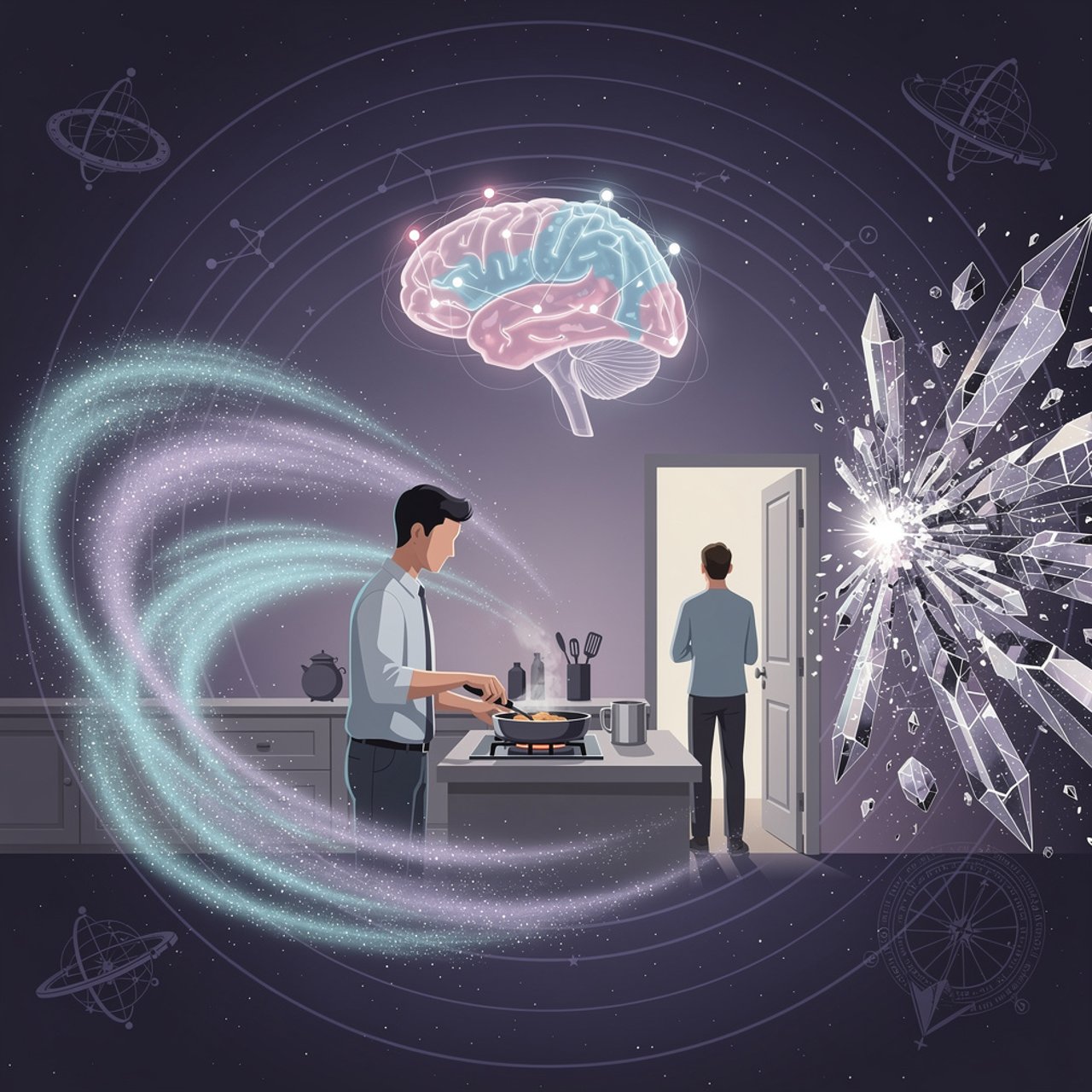
Different brain areas have special roles, but they work together through connected networks. Your emotions, memories, decisions and inner dialogue involve cooperation, not one region acting alone. InnerVoice’s Voice of Security and Voice of Insecurity describe dynamics in your internal dialogue, not separate brain structures.
Different parts of your brain work together. They have special roles, but everyday tasks depend on connected networks, not little islands working alone. Even answering a friend’s question brings together hearing, language, memory, feelings and movement. You experience one reply; behind it is a busy team effort.
How do brain areas cooperate during an everyday task?
Brain areas cooperate by exchanging signals through networks of nerve cells. Information passes back and forth, so what you notice can affect what you remember, feel and decide.
Imagine cooking dinner when someone calls your name. You hear the sound, recognize the voice, turn your head and answer while keeping an eye on the pan. Your brain combines sound, meaning, body position and your goal of not burning dinner.
Think of a restaurant kitchen. Different people prepare food, check orders and carry plates, but a meal depends on their coordination. Your brain also has specialists. Unlike a kitchen with a single head chef, though, brain activity involves many loops of communication. There is no tiny person inside directing everything.
What special roles do different brain areas have?
Different brain areas contribute different kinds of work, such as processing sights, supporting memory or planning actions. A special role does not mean an area owns a whole ability, emotion or part of your personality.
The cerebrum is the large upper part of your brain. Its outer layer, the cerebral cortex, has several lobes. The frontal lobes contribute to planning and action; the prefrontal cortex, within them, helps you weigh options and manage impulses. The temporal lobes contribute to hearing, language and memory. The parietal lobes help process touch and spatial relationships, while the occipital lobes are especially important for vision.
Other structures join in. The hippocampus helps form new memories of events and their context. The amygdala helps process emotionally important information and learn about threats; it is not simply a fear button. The brainstem supports vital functions, including breathing, while communicating with other areas.
These names describe an overlapping map, not separate boxes. The prefrontal cortex is part of the frontal lobe, not another brain beside it. Likewise, areas often called Broca’s and Wernicke’s areas contribute to language within wider networks. Speaking and understanding do not happen in two isolated word factories.
Does one brain region create a complete emotion?
A complete emotional experience involves cooperation across brain networks and signals from your body. No single region produces the whole experience of fear, confidence, love or sadness by itself.
Suppose your manager sends, “Can we talk?” Your eyes process the words. Language networks help you understand them. Memory supplies earlier conversations. You consider what the message might mean, and your heart may start beating faster. That changing mix shapes how the moment feels.
Then you remember: your manager wanted help planning a team lunch. The meaning changes, and your response may change too. This is why calling the amygdala “fear headquarters” can mislead you. Emotional experience depends on context, learning, body signals and cooperation, not one alarm acting alone.
How do neurons and synapses connect the brain’s work?
Neurons are nerve cells that send and receive signals, and synapses are the junctions where they communicate. Together, they connect activity within brain areas and between them.
Signals travel electrically along neurons and usually pass between them through chemical messengers at synapses. These messages help link seeing your cup with reaching for its handle. Many signals are active at once; they are not all words or conscious thoughts.
Learning can change how these connections work. When you practise a skill, the networks involved can become better suited to that task. Rehearsing a presentation may make finding your next sentence easier. But one worried thought does not automatically build a permanent “negative superhighway.” Brain change is more complex than that.
Where do the two InnerVoice voices fit into brain cooperation?
The Voice of Security and Voice of Insecurity are InnerVoice model labels for opposing dynamics in your internal dialogue. They are not two brain regions or two separate people living inside you.
InnerVoice proposes that the dynamic balance between Security and Insecurity is foundational to every human emotion. Security includes perceived safety, familiarity and capability; Insecurity includes uncertainty, threat and a sense of not being ready. This is the framework’s way of interpreting emotional experience, not an anatomical map.
Before a presentation, the Voice of Insecurity might say, “Check your figures.” The Voice of Security might say, “You know this subject.” Both can help. Unchecked confidence could make you skip preparation; overwhelming doubt could stop you speaking. Balance means an ongoing relationship between both voices, not maximum confidence. And internal dialogue is only part of thinking: images, sensations and nonverbal understanding matter too.
How can understanding brain cooperation help you?
Understanding brain cooperation helps you look beyond a single thought or feeling when choosing your next step. You can consider what you noticed, remembered and felt in your body.
Next time a message unsettles you, ask: “What did it actually say, and what meaning did I add?” That small distinction gives your next response more information to work with.
Take a moment to listen.
Explore the WIKI audio collection on InnyApp, at your own pace.
Play audio versionon InnyAppKeep exploring
Your Brain
Can InnerVoice make sense if I do not think in words?
Your Brain
How does InnerVoice relate to self-talk research?
Your Brain