
How can practice make an unfamiliar task feel less scary?
Practice can make a task less scary by helping you learn what to expect and build the skills to handle it. Familiarity does not remove real danger, and fear may not fade at the same pace for everyone. InnerVoice frames useful progress as a changing balance between confidence and caution, not the elimination of doubt.
Author: P.v.Dieren, PnD
Editorial review: J. Belonje
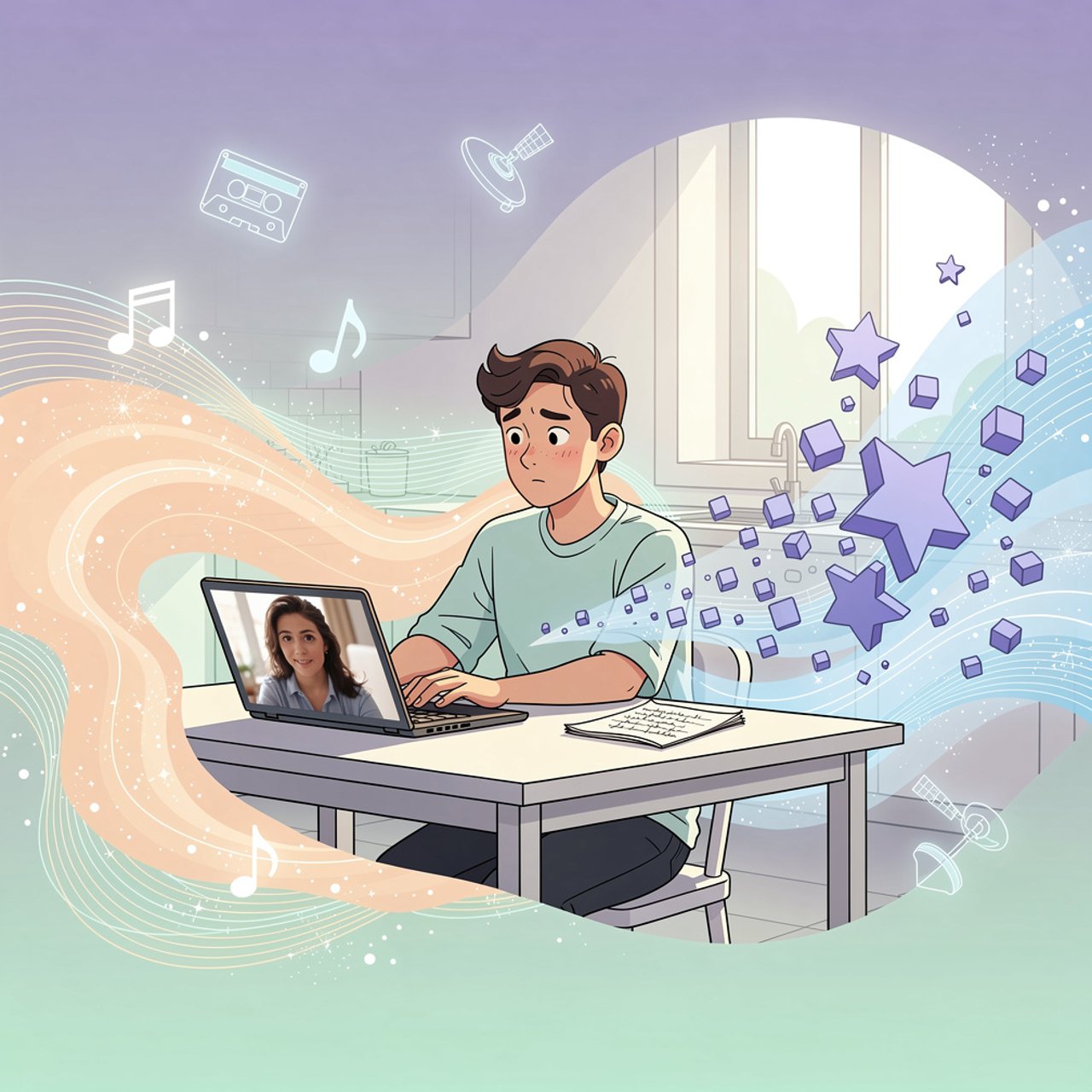
Practice can make a task less scary by helping you learn what to expect and build the skills to handle it. Familiarity does not remove real danger, and fear may not fade at the same pace for everyone. InnerVoice frames useful progress as a changing balance between confidence and caution, not the elimination of doubt.
Practice can make an unfamiliar task feel less scary because it gives your brain experience to draw on and helps you build skill. You move from “I have no idea what will happen” toward “I know the next step.” That can ease fear, though it does not guarantee it or remove real risks. Think of your first video meeting: even finding the mute button can feel like a test.
Why can unfamiliar tasks feel threatening?
Unfamiliar tasks can feel threatening because you have little experience to help you predict what will happen or how you will cope. Uncertainty leaves more room for your mind to imagine trouble.
Before leading your first meeting, you might picture forgetting your words, pressing the wrong button, or being asked something you cannot answer. Your shoulders tighten. You read your notes again but barely take them in.
Your brain uses past experience, current signals, and the situation around you to assess possible threats. Many connected brain systems take part; there is no single “fear button.” Sometimes that assessment is useful. Sometimes the unknown feels more dangerous than it is. Practice gives you more information to work with, rather than asking you to feel brave on command.
What does practice change in your brain?
Practice supports learning: your brain changes how it handles a task as you repeat it, notice results, and make corrections. Over time, familiar steps can need less deliberate attention.
Learning involves changes in connections between nerve cells and in how networks work together. This capacity for change is called neuroplasticity. It is not a promise that every repetition makes you calmer; what you practise and what happens during practice matter.
At first, sharing your screen may take all your attention. After several rehearsals, you know where to click and how to stop sharing. That leaves more attention for what you want to say.
Practice is like walking through a new building. The first visit takes effort: Which door? Which stairs? Later, you recognize the route. The building has not changed. Your knowledge of it has.
How do familiarity and skill help reduce fear?
Familiarity helps you know what to expect, while skill helps you respond. Together, they can reduce uncertainty and give your confidence a practical base.
Watching ten cooking videos may make a recipe familiar. Actually chopping, measuring, and adjusting the heat builds skill. Those are related gains, but they are not the same.
You also learn from moments that go differently than expected. You lose your place during a rehearsal, pause, and find it again. Now your brain has an experience that challenges “If I stumble, everything is ruined.” You have learned a recovery step.
Fear may still show up as a quick heartbeat or shaky hands. Yet you can know what to do while feeling nervous. Sometimes practice first changes your ability to act, and only later changes how scary the task feels. We do not all learn comfort on the same schedule.
How does InnerVoice explain growing confidence through practice?
InnerVoice proposes that the dynamic Security ↔ Insecurity balance is foundational to every human emotion. For an unfamiliar task, practice may shift that balance by increasing familiarity, confidence, and perceived capability.
The Voice of Insecurity expresses doubt and caution: “What if you freeze?” The Voice of Security can draw on preparation: “You have rehearsed the opening, and you can pause.” These are framework labels for inner dynamics, not separate brain parts. Your experience may also include images and feelings, not just words.
InnerVoice proposes that the Five Transformations, or 5TFM, describe the foundational, recurring process people use to navigate these dynamics. Its final transformation is Befriend your Inner Voice. For practice, that means learning to act without letting every doubt take charge, while keeping useful caution. Balance is a changing relationship between both voices, not maximum confidence.
Does feeling less scared mean a task is safe?
Feeling less scared does not prove that a task is safe. Familiarity changes your experience of danger; skill and proper safeguards help you manage danger, but do not erase it.
An experienced climber may feel calmer at height because they know how to move, check equipment, and recognize problems. The height still matters. So do the weather, the route, and the condition of the gear.
In InnerVoice terms, the Voice of Insecurity may offer an essential warning: “That attachment needs checking.” Unchecked Voice of Security might say, “You have done this before; skip it.” More confidence is not always better.
For tasks with physical risk, use qualified instruction and appropriate safety measures. The aim is informed confidence, not getting so used to danger that you stop noticing it.
What kind of practice is worth trying?
Useful practice is manageable, relevant, and guided by feedback. Choose a safe step that teaches you something specific rather than simply repeating an overwhelming experience.
For a meeting, try sharing your screen with one trusted person. Practise losing your place and restarting. Afterwards, ask what became easier and what still needs support.
Past experiences, stress, health, and learning needs can affect your response. If fear stays intense or grows, consider a smaller step or professional support. You do not need to measure success only by calmness. A useful question is: “What can I handle or understand now that I could not before?”
Take a moment to listen.
Explore the WIKI audio collection on InnyApp, at your own pace.
Play audio versionon InnyAppKeep exploring
Your Brain
Can InnerVoice make sense if I do not think in words?
Your Brain
How does InnerVoice relate to self-talk research?
Your Brain