
How do stories pass experience from one generation to another?
Stories turn lived events into words that younger generations can remember, question and use. They carry history, warnings and possible ways forward, but being passed down does not make a story true. InnerVoice offers a lens for noticing how inherited messages become part of your internal dialogue, so you can keep useful lessons without treating every old warning as a rule.
Author: P.v.Dieren, PnD
Editorial review: J. Belonje
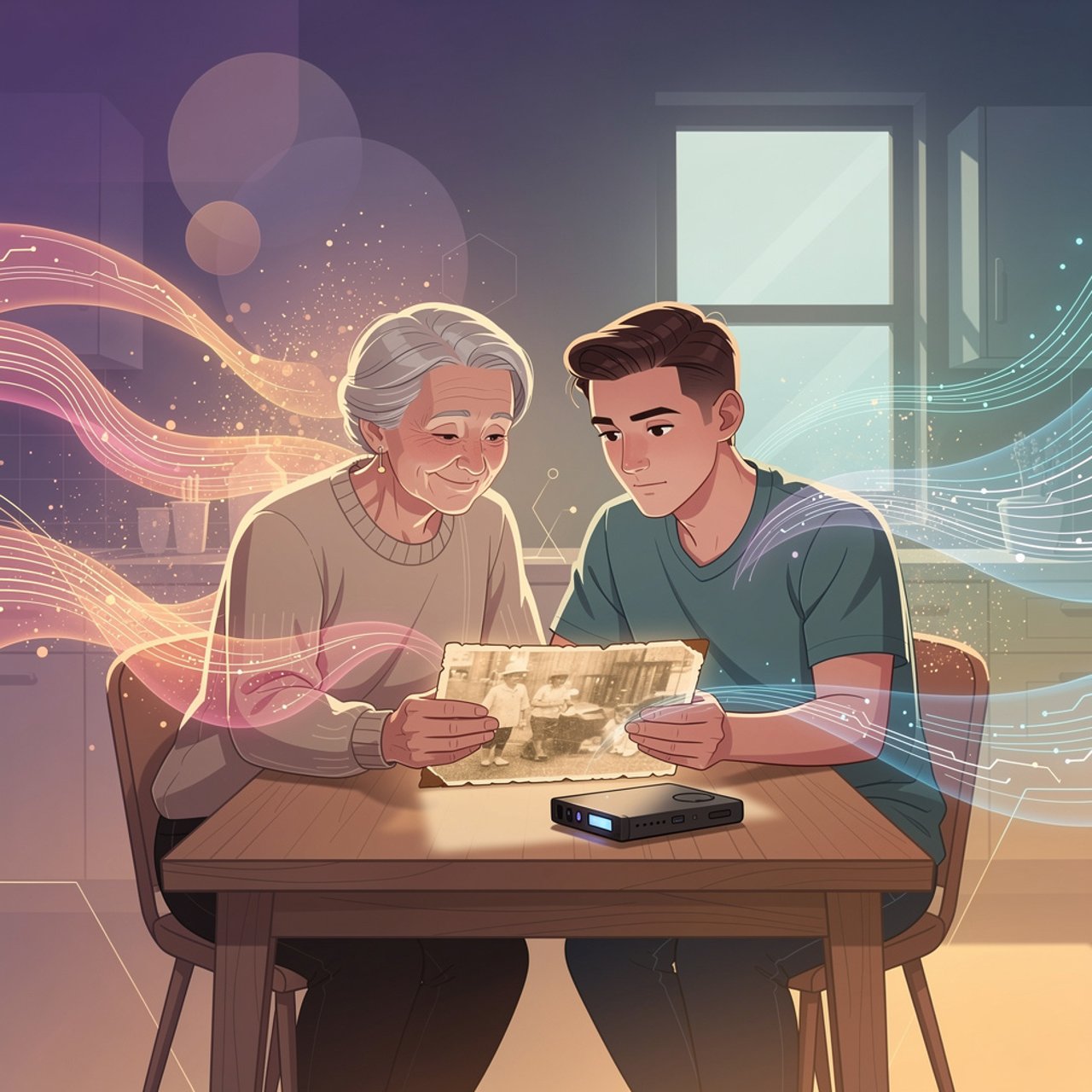
Stories turn lived events into words that younger generations can remember, question and use. They carry history, warnings and possible ways forward, but being passed down does not make a story true. InnerVoice offers a lens for noticing how inherited messages become part of your internal dialogue, so you can keep useful lessons without treating every old warning as a rule.
Stories pass experience between generations by turning what someone lived through into something another person can understand without living through it themselves. Words carry events, feelings, warnings and possible choices across time. But passing on a story and proving it true are two different things.
You see this at the kitchen table, in a saved voice message or while someone explains an old photograph. A person who was there gives you more than a date. They tell you what it was like—and what they think you should learn.
How do words carry experience beyond the moment?
Words let you describe something that is absent: a place you left, a danger you survived or a future you hope for. A story connects those meanings into an event you can follow.
Imagine an older relative describing their first winter in a new town. They had one thin coat, missed the last bus and were helped by a stranger. You were not standing at that bus stop. Yet you can picture the cold, the worry and the relief.
The story carries several kinds of experience at once: family history, a warning to plan ahead and the possibility that strangers can be kind. In InnerVoice's account, language matters because you can respond to meaning carried by words, not only to something right in front of you.
What makes a story different from a bare instruction?
A story gives a lesson a setting, a person and a consequence. Instead of only telling you what to do, it shows how a choice played out for someone.
“Keep some savings” is an instruction. “When the shop closed, that small savings jar paid for our groceries” gives the instruction a human reason. You can see the jar on the shelf and understand what it protected.
Stories also carry values. A family may keep telling the story of someone who admitted a costly mistake. The lesson is not just about that mistake. It says, “In this family, honesty matters.” We receive these messages through spoken or signed stories, books, recordings and everyday retellings. Each new listener may later become the teller.
Does an inherited story have to be true to travel?
No. A story can travel because it is moving, familiar or often repeated, whether or not its claims are accurate. Transmission tells you that people shared it; verification asks what supports it.
Your family might say that a great-grandparent arrived in a new country with nothing but a suitcase. Perhaps that is accurate. Perhaps “nothing” leaves out savings, helpful contacts or relatives already living there. The story may express real pride while giving an incomplete account.
A competing view says only verified facts deserve to be passed on. Facts matter, especially when a story guides decisions. But fiction and legend can still explore courage, loss or care without being records of actual events. The key is to name what you are sharing: a documented event, a personal memory, a family tradition or an imagined tale.
Why do stories change between generations?
Stories change because each teller chooses details and explains them from their own point of view. A retelling can preserve a lesson while changing the wording, emphasis or meaning.
One generation remembers moving away as an escape from hardship. The next describes it as a brave adventure. Another asks about the people left behind. These versions may reveal different parts of the same event, but they can also conflict.
That is why it helps to keep the source attached: “This is how your grandmother remembered it.” You leave room for another memory or a record that adds detail. In today's world, an old story can also arrive as a short video stripped of context. A confident narrator and thousands of shares do not settle whether it is accurate.
How can inherited stories shape your inner voice?
InnerVoice proposes that learned language and social judgments help shape your internal dialogue, which it calls your inner voice. Inherited stories can supply some of the messages you later repeat to yourself.
Suppose your family often tells how someone lost money starting a business. When you consider working for yourself, you may think, “People like us should not take risks.” InnerVoice calls the caution dynamic the Voice of Insecurity. The Voice of Security may answer, “I can learn, prepare and start small.” These are model labels, not two separate people inside you.
Neither message deserves automatic control. Caution can protect you; confidence can become reckless. InnerVoice's aim is balance: an ongoing relationship between both voices. You can respect the old loss while asking whether its lesson fits your situation.
How can you pass on stories responsibly?
Responsible storytelling preserves the experience while being clear about what you know, what you remember and what you interpret. You can offer a lesson without turning it into a rule for everyone.
Choose one story you want to keep. Record who told it, what happened and why it mattered. If a detail is uncertain, say so. If you drew a lesson from it, name that as your lesson.
Then leave the next generation room to think. “This helped me then” is often more useful than “This is how life always works.” A story can hand you experience without taking away your right to choose.
Take a moment to listen.
Explore the WIKI audio collection on InnyApp, at your own pace.
Play audio versionon InnyAppKeep exploring
Modern Ideas
Why does InnerVoice believe the inner voice gets overlooked?
Modern Ideas
Which research connects with InnerVoice's ideas?
Modern Ideas