
Why do I bite my nails or fidget when I feel tense?
Tension can make you restless, and repeated movements may offer brief relief or useful sensory input. Your brain can learn to repeat that soothing habit, sometimes before you notice it. But nail biting and fidgeting can also happen during boredom or concentration; neither is a reliable measure of your InnerVoice balance.
Author: P.v.Dieren, PnD
Editorial review: J. Belonje
Tension can make you restless, and repeated movements may offer brief relief or useful sensory input. Your brain can learn to repeat that soothing habit, sometimes before you notice it. But nail biting and fidgeting can also happen during boredom or concentration; neither is a reliable measure of your InnerVoice balance.
You may bite your nails or fidget when tense because movement and familiar sensations can briefly ease discomfort. If that helps, your brain can learn to repeat the action, sometimes without your noticing. But tension is not the only cause, and these habits do not reveal your character or measure your inner balance.
You are waiting for a difficult call. Your foot starts bouncing. A finger finds your mouth. Before you have named what you feel, your hands are already busy.
What happens in your brain and body when you feel tense?
Tension can involve your brain and nervous system preparing you to respond to a challenge. Changes in alertness, muscle tension and breathing can leave you feeling restless, even when there is no immediate action to take.
Think of sitting outside an interview room. You need to wait, but your body feels ready to move. You shift in your chair, rub your fingertips or bounce one knee. Small movements can give that restlessness somewhere to go.
This is not one brain region pressing a “nail-biting button.” Systems involved in attention, movement, learning and responses to stress work together. The result may feel much simpler than the process behind it: “I need to do something with my hands.”
How does a soothing action become an automatic habit?
A soothing habit can develop when your brain learns that an action brings brief relief or a satisfying sensation. With repetition, a familiar cue can prompt the action before you consciously decide to do it.
Perhaps you feel pressure while reading an email. You bite a nail, and for a moment your attention shifts from the message to your fingers. If the discomfort eases, that small payoff can help the behavior stick.
The pattern is like a path worn across grass. Each trip makes the route easier to follow. Later, opening your inbox may be enough to start the habit, even when the message is harmless.
Sometimes the payoff is physical rather than emotional. A rough nail edge catches your attention, and biting seems to fix it. Relief, texture and routine can overlap.
Does fidgeting or nail biting always mean anxiety?
Fidgeting and nail biting do not always mean anxiety. They can also happen during boredom, deep concentration, excitement or a search for sensory stimulation.
You might twist a ring while solving a problem, tap your foot during a long meeting or bite a nail while watching television. The same movement can serve different purposes at different times. Some people find quiet movement helps them stay engaged.
That is why watching someone's hands is not enough to know what is happening inside them. Stillness does not prove calm, and movement does not prove distress. Fidgeting and nail biting are not reliable measures of a person's balance, including in the InnerVoice framework.
How does InnerVoice explain the tension behind a soothing habit?
InnerVoice proposes that the dynamic balance between Security and Insecurity is foundational to every human emotion. Its soothing-habit theme invites you to explore the tension behind a behavior, without treating every movement as proof of Insecurity.
The Voice of Insecurity represents doubt, uncertainty and caution in your internal dialogue. Before that difficult call, it might say, “What if I cannot explain myself?” The Voice of Security represents confidence, familiarity and perceived ability: “I can prepare my main point and ask for time if needed.”
These are model labels, not separate brain parts. You may also feel tension without any words passing through your mind.
Balance means a changing relationship between both voices, not making doubt disappear. Caution can help you prepare; unchecked confidence can make you skip preparation. The useful question is not “Do my moving hands mean I am unbalanced?” It is “What concern, sensation or need is here right now?”
How can you respond without fighting your hands?
You can respond to a soothing habit by noticing its cues and offering a safer action that meets a similar need. Harsh self-criticism adds another problem; practical changes give you something useful to do.
For a few days, notice when it happens. Are you waiting, concentrating or feeling judged? Do you notice a rough edge first? You are gathering clues, not grading yourself.
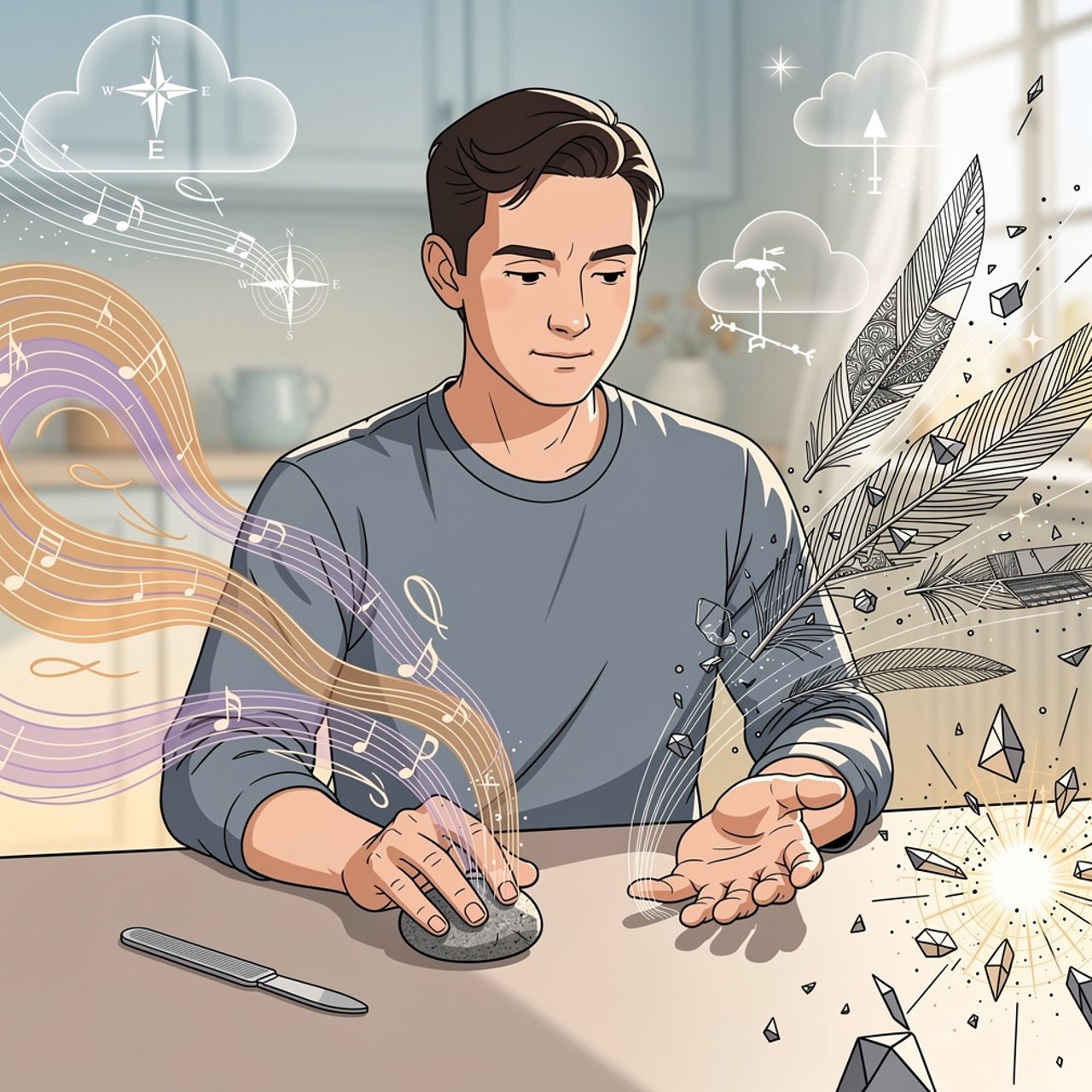
If your fingers need texture, try a smooth stone or soft object. If a nail edge triggers biting, use a nail file. If your body needs movement, stand or stretch when possible. Harmless fidgeting may not need to stop at all.
If biting causes bleeding, pain, infection or distress, or feels hard to control, ask a healthcare professional for help. For now, notice one moment when your hand starts moving. Ask what it needs before telling it to stop.
Take a moment to listen.
Explore the WIKI audio collection on InnyApp, at your own pace.
Play audio versionon InnyAppKeep exploring
Your Brain
Can InnerVoice make sense if I do not think in words?
Your Brain
How does InnerVoice relate to self-talk research?
Your Brain