
Why does my inner critic seem louder after a bad night's sleep?
Poor sleep can make it harder to focus, manage emotional reactions and question harsh self-talk. Your inner critic may feel louder because you have less mental room to put it in perspective—not because its judgments are more true. Sleep is one influence, not an explanation for every difficult thought.
Author: P.v.Dieren, PnD
Editorial review: J. Belonje
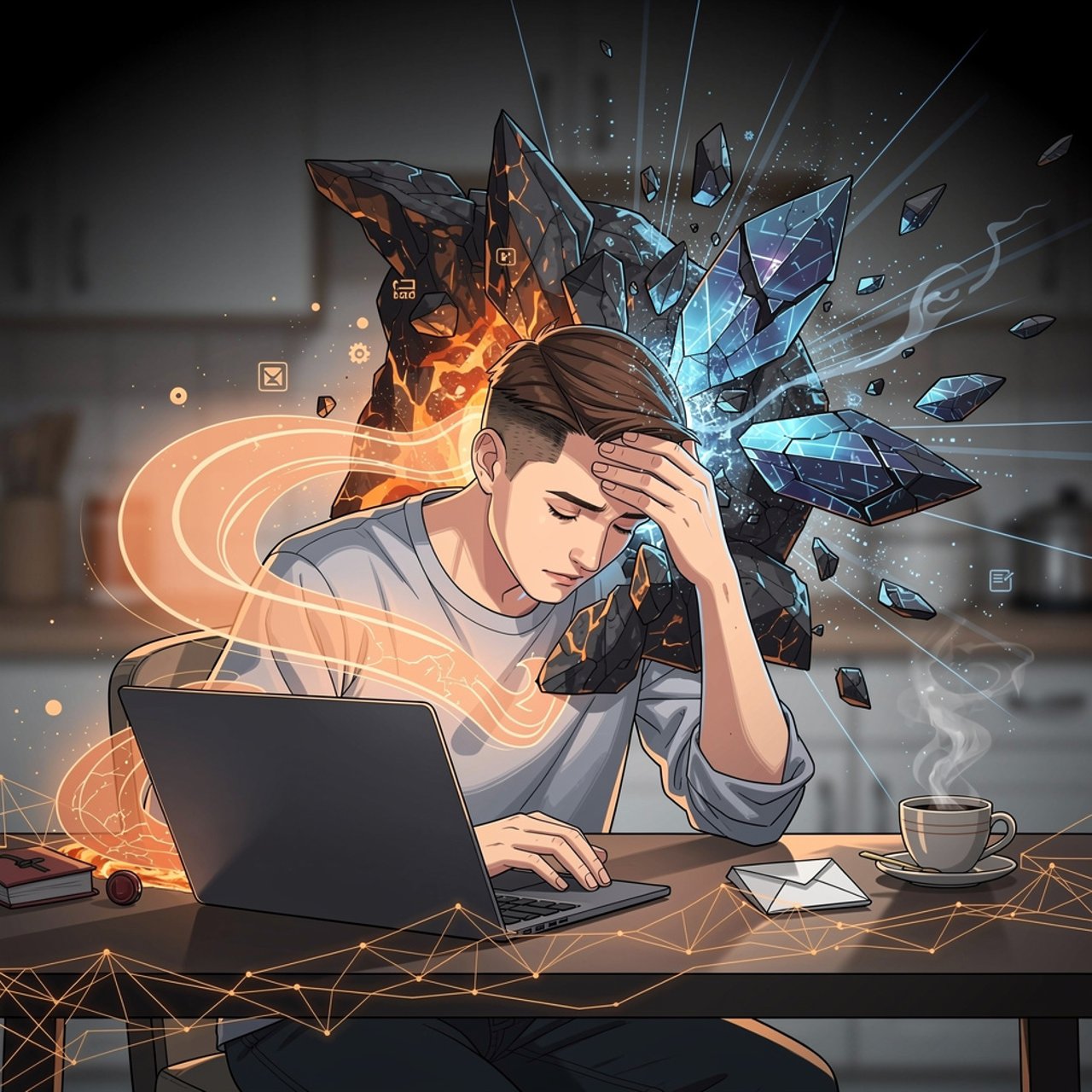
Poor sleep can make it harder to focus, manage emotional reactions and question harsh self-talk. Your inner critic may feel louder because you have less mental room to put it in perspective—not because its judgments are more true. Sleep is one influence, not an explanation for every difficult thought.
Your inner critic can seem louder after poor sleep because tiredness can weaken attention and make emotions harder to manage. You may have less mental room to check a harsh thought before believing it. That does not make the thought more accurate, and sleep does not explain every painful thought.
You spill coffee, miss a bus or forget an attachment. On a rested morning, it is a small mistake. After a broken night, the same slip can become: “Why can’t I do anything right?” The event has not grown. Your ability to keep it in proportion may have changed.
How does poor sleep affect mental clarity?
Poor sleep can make sustained attention and working memory less reliable. Working memory is your ability to hold information in mind while using it, such as remembering instructions while carrying them out.
Think of reading an email while someone keeps interrupting you. You lose the thread and have to start again. Tiredness can create a similar experience: you overlook a detail, struggle to find a word or forget what you were about to do.
Checking an inner judgment also takes attention. When your mind says, “Everyone thinks I’m useless,” you need room to ask, “Everyone? What actually happened?” After poor sleep, that pause may be harder to find. The first explanation can feel like the only explanation.
Why can a tired brain make a small problem feel bigger?
Sleep loss can change emotional responses, reduce positive mood and increase anxiety. That combination can make a setback feel harder to handle, though not everyone reacts to poor sleep in the same way.
A large 2024 review of sleep-loss experiments found effects on mood and emotional experience. This supports the link between sleep and how you feel; it does not show that every tired person becomes more self-critical.
Your brain manages emotions through interacting networks that help notice important events, use context and guide a response. There is no single “inner critic” region. After inadequate sleep, these systems may work together differently, while the attention needed to reconsider your reaction can also be less steady.
Suppose your manager says, “Can we talk later?” You might usually think, “Probably about the schedule.” Today, with gritty eyes and a tense stomach, you jump to, “I’ve messed up.” The feeling is real. The conclusion still needs checking.
How does InnerVoice understand a louder inner critic?
InnerVoice understands harsh self-talk through the relationship between the Voice of Insecurity and the Voice of Security. InnerVoice proposes that the underlying Security ↔ Insecurity balance is foundational to every human emotion.
These names describe dynamics in the framework, not separate brain parts or two people inside you. The Voice of Insecurity can express uncertainty, doubt and caution. The Voice of Security can express familiarity, confidence and perceived ability.
Through this lens, tiredness may make uncertainty harder to handle and leave less room for a grounded reply. “I forgot the attachment” becomes “I’m unreliable.” A steadier reply might be: “I made one error. I can send it now.”
Balance does not mean making Security win every argument. Insecurity may usefully say, “Double-check that file.” Unchecked Security might say, “I never need to check.” The useful goal is to hear the warning without accepting the insult.
Does poor sleep explain every harsh thought?
Poor sleep is one possible influence on harsh self-talk, not a complete explanation. Stress, learned judgments, conflict, pain and mental health difficulties can also matter, and worry can itself interfere with sleep.
Sometimes the critic repeats an old message: “You should never make mistakes.” Sometimes you are facing a real problem that needs attention. Rest may help you think more clearly, but it does not remove a demanding workload or another person’s hurtful behavior.
So avoid turning sleep into another accusation: “Now I’m thinking badly because I failed at sleeping.” A difficult night is information about your current condition, not a verdict on your character.
What can you do when tired self-talk turns harsh?
When tired self-talk turns harsh, separate the fact from the judgment and choose one manageable response. You do not need to win a long debate with your mind.
Try this with the missing attachment. The fact is, “The file wasn’t sent.” The judgment is, “I always ruin things.” The next action is, “Send the file with a brief correction.” That keeps a fixable mistake from becoming your whole identity.
You can also say, “I’m tired, so I’ll check this conclusion later.” Where possible, delay sweeping judgments about your worth and important nonurgent decisions. Keep your day realistic, and give yourself a chance to rest tonight rather than treating exhaustion as something to defeat.
If sleep trouble or severe self-criticism keeps returning, talk with a healthcare professional. For now, notice one thing: did the critic bring useful information, or only a harsher tone? You can respond to the information without borrowing the tone.
Take a moment to listen.
Explore the WIKI audio collection on InnyApp, at your own pace.
Play audio versionon InnyAppKeep exploring
Your Brain
Can InnerVoice make sense if I do not think in words?
Your Brain
How does InnerVoice relate to self-talk research?
Your Brain